PROVERBS 11:1 — “A JUST WEIGHT IS HIS DELIGHT.” IRS-approved custodian & depository · Salaried experts

Gold & Silver IRA / Why gold

Why people invest in gold

There are two ways to own gold with us. You can move part of a 401(k) or an IRA into a Gold & Silver IRA, or you can buy it outright with cash. This page explains why people hold gold, what can go into a Gold IRA, and how our pricing works.

Gold is a physical asset. It is not a share in a company, a loan to a government, or a number in a bank account. For people who have spent decades saving in dollars, the case for owning some of it comes down to three reasons.

An American Gold Eagle standing against a stack of gold bullion coins on a black reflective surface

Reason 01 — Protect your purchasing power

As the dollar buys less, gold has historically held its value.

Inflation gradually reduces what every dollar can buy.

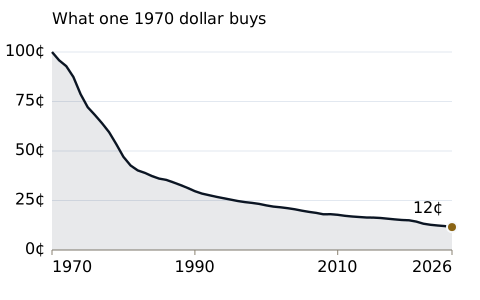
In 1970, $1 bought what takes more than $8 today. Your account may contain more dollars than it did twenty years ago, but what matters is what those dollars can actually buy.

What one 1970 dollar buys, 1970 to 2026: falling from 100 cents to about 12 cents

Measured by the government’s own Consumer Price Index, a dollar from 1970 now buys what 12 cents bought then.

Source: US Bureau of Labor Statistics, CPI-U. 1970 annual average to August 2026.

The evidence

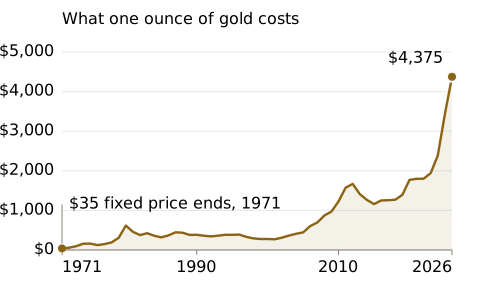
Price of one ounce of gold in dollars, 1971 to 2026, rising from 35 dollars to more than 4,000 dollars

Fixed by the government at $35 an ounce until August 1971. Set by the market ever since.

Source: annual average gold price, 1971 to 2025; spot price on 1 September 2026.

Gold has moved in the opposite direction over the long term.

In 1971, an ounce of gold was priced at $35. Today, that same ounce costs more than $4,000.

Gold does not rise every year, and its price can fall. But over long periods, it has been used as a way of holding value while currencies lose purchasing power.

Reason 02 — Diversify what you own

Most retirement accounts are built around stocks, bonds and cash. Gold gives you something different.

Gold is a physical asset whose value is influenced by different forces.

That is why some investors hold gold alongside traditional investments rather than relying entirely on the same types of assets.

A husband and wife in their sixties reading a printed statement together at their kitchen table

Reason 03 — Protection when markets are under stress

Gold can behave differently when financial markets are under stress.

Stocks, bonds and other financial assets can all come under pressure at the same time. Gold does not always move with them.

That is one reason investors hold gold alongside traditional investments — and why central banks cite its performance during times of crisis as an important reason for holding it.

Gold can still rise and fall in price. It is not risk-free.

A tablet on a kitchen table showing a falling stock market chart in red, with a mug and reading glasses beside it

The same three reasons, at national scale

Central banks have been adding gold to their reserves — and they cite the same three reasons for holding it.

The reasons above are not unique to individual investors. Central banks around the world have been increasing their gold reserves — around 1,000 tonnes a year over the last four years — and when the World Gold Council asked them why they hold gold, their answers closely match the reasons we have just explained.

The stone facade and bronze doors of a national central bank in late-afternoon light

84%

Long-term store of value

Reason 01Protect your purchasing power

83%

Portfolio diversification

Reason 02Diversify what you own

90%

Performance during times of crisis

Reason 03Protection when markets are under stress

In other words, central banks are buying and holding gold for many of the same fundamental reasons individual investors do: to preserve value, diversify what they own, and hold an asset that can remain useful during periods of financial uncertainty.

Source: World Gold Council, Central Bank Gold Reserves Survey 2026 — 69 central banks, share rating each reason relevant; central bank net purchases 2022–2025, World Gold Council.

Why Grace

When you’re ready to own gold, this is how Grace sells it.

Physical gold and silver, priced transparently and fairly. Four commitments make that more than a promise, and all four are written down here.

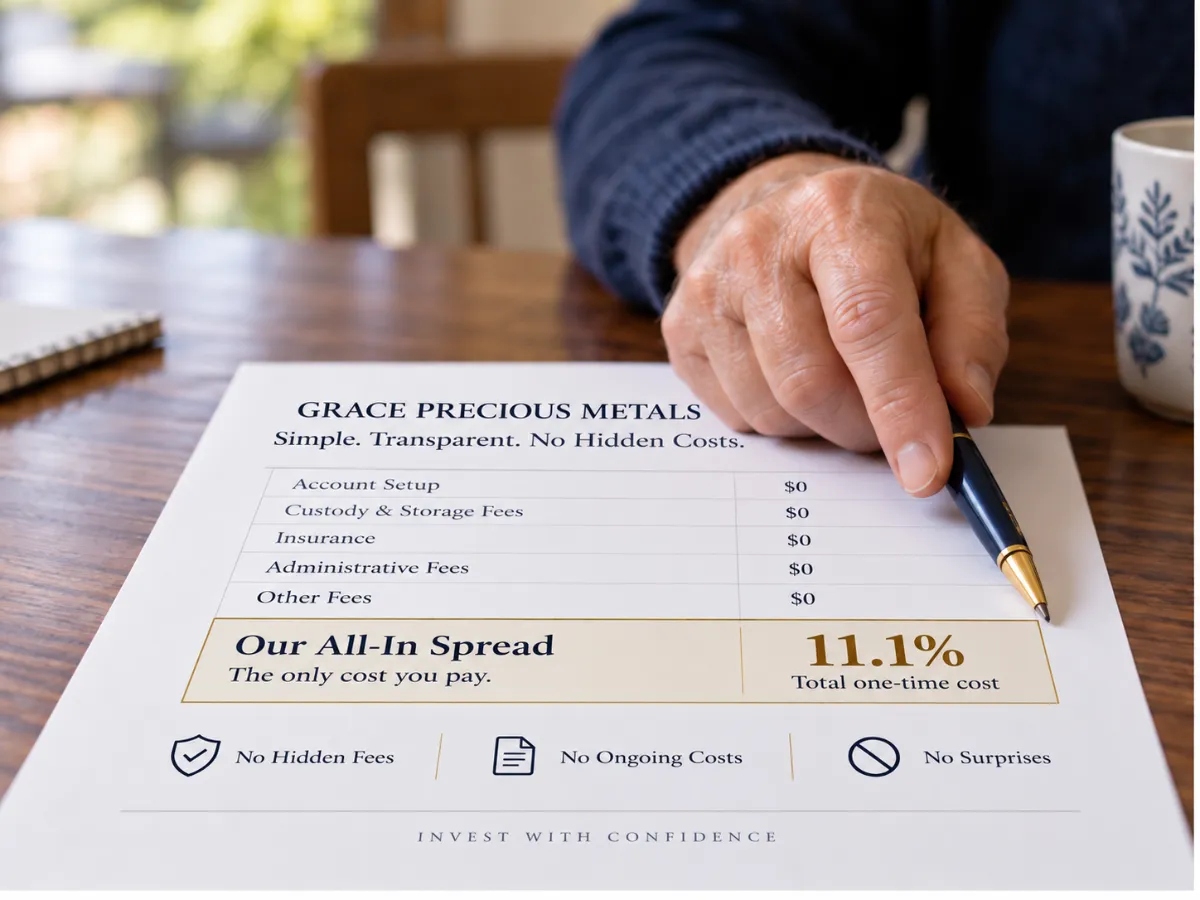
A hand pointing to the all-in total on a printed precious metals IRA cost sheet

01

Published spread, 11.1% all-in

The markup over spot is 11.1%. That is the whole markup. Nothing is added on a phone call. Nothing is negotiated off it. Inside an IRA, your custodian and depository charge their own annual fees, which are set out on our pricing page.

See the pricing →
A man at his kitchen table reading a Grace buyback statement

02

Buyback with no commission

When you decide to sell, Grace buys back with no commission. No exit spread, no liquidation fee, no markdown.

How buyback works →
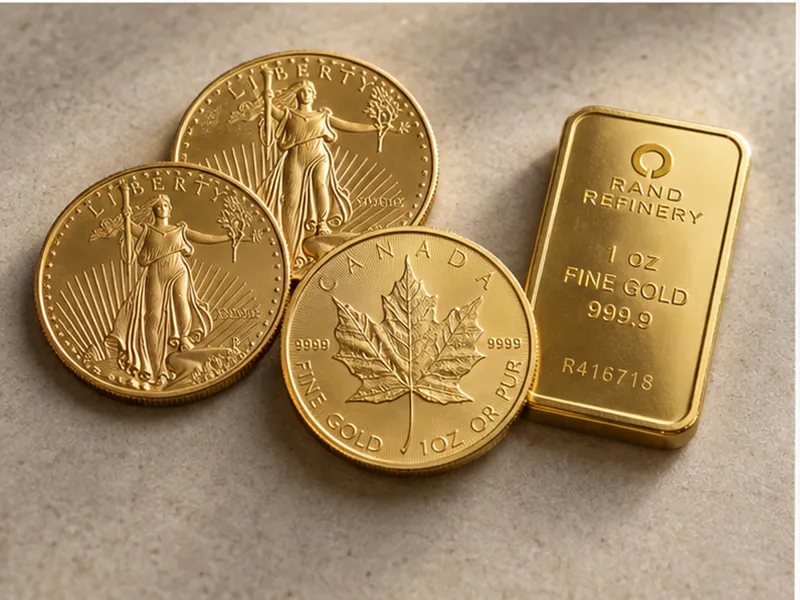
Two American Gold Eagles, a Canadian Gold Maple Leaf and a one-ounce gold bar

03

Standard IRS-eligible bullion only

American Eagles, Canadian Maple Leafs, LBMA-approved bars. No numismatic, exclusive, rare, premium, or proof coins in any form.

Why no numismatics →
A Grace expert on a headset at his desk, reading paperwork

04

Salaried experts, not salespeople

The person you speak to earns the same whether you buy or sell. No commissions, no referral fees, no volume incentives.

Meet the expert team →

If you’re buying through a Gold IRA

Not every gold product can go into an IRA — and Grace won’t sell every product that can.

The IRS allows a range of gold products. Grace deliberately sells a narrower range: straightforward bullion that gives you gold weight, not expensive stories around the gold.

IRA-eligible gold must be at least 99.5% pure and held by an IRS-approved depository under your custodian’s control. The law makes one exception by name: the American Gold Eagle.

IRA eligible — Grace sells it

  • ●American Gold Eagle
  • ●American Gold Buffalo
  • ●Canadian Gold Maple Leaf
  • ●Austrian Gold Philharmonic
  • ●Australian Gold Kangaroo
  • ●British Gold Britannia
  • ●Bars from LBMA-approved refiners

Standard bullion versions only. Your money buys ounces.

Products Grace chooses not to sell

  • ●Proof versions of eligible coins
  • ●“Exclusive” and “limited” issues
  • ●Privately branded coins and rounds sold as special

Some products in these categories may qualify for an IRA. Grace chooses not to sell them. They cost more than standard bullion of the same weight, and you may not recover the extra premium when you sell.

Not IRA eligible

  • ●South African Krugerrand
  • ●Pre-1933 US gold coins — Saint-Gaudens, Liberty and Indian Head
  • ●Graded, rare and collectible coins
  • ●Any IRA gold you store at home

The Krugerrand and the American Gold Eagle are both 22-karat gold. The law names the Eagle. It does not name the Krugerrand.

Want to go deeper?

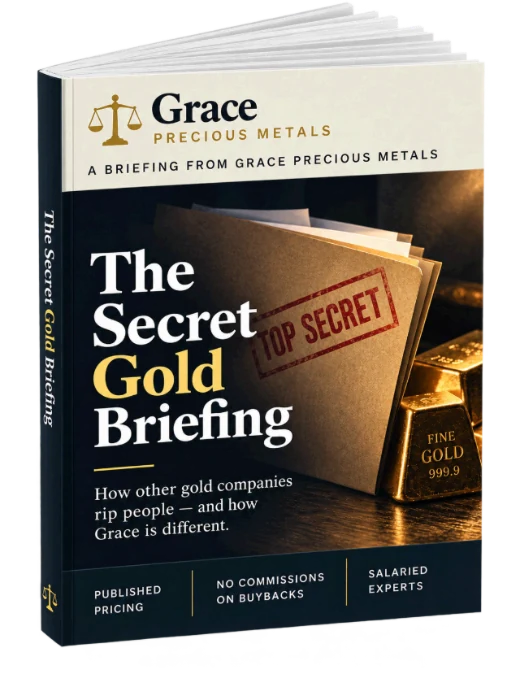
The Secret Gold Briefing

Written by Bill Armour, Co-Founder

Bill Armour, Co-Founder
“Physical gold is the asset itself; it carries no counterparty who can default, dilute, or freeze it. For savers who have watched their purchasing power erode, that independence is critical.”

Bill Armour spent years inside the Gold IRA industry before co-founding Grace. This is the guide he wrote about it.

The Secret Gold Briefing, a printed guide from Grace Precious Metals

Send me the Secret Gold Briefing

Understand how gold pricing works, what to look for in a buyback policy, and which questions to ask before you buy.

Thank you, {{ first }}.

The Secret Gold Briefing is on its way to {{ email }}.

By clicking the button above, you agree that Grace Precious Metals can contact you at the e-mail and telephone number provided (including auto-dialed/auto-selected and prerecorded calls or text/SMS messages) with marketing offers. Msg. and data rates apply. Your consent to such contact is not required for purchase.

Common questions

Gold, specifically.

Yes. One account, one custodian, one depository. You can hold gold, silver, or a mix of the two, and you can change the mix later. Our spread is 11.1% on either metal, so the split is a decision about what you want to own, not about what it costs you.

No. The Krugerrand is 22-karat gold and is not on the list the law allows. Pre-1933 US coins — Saint-Gaudens, Liberty and Indian Head pieces — are about 90% gold and are treated as collectibles, which an IRA cannot hold. Neither qualifies for a Gold IRA.

Because the law names it. IRA gold must normally be at least 99.5% pure, and Congress wrote one exception into the tax code for the American Gold Eagle. A one-ounce Eagle still holds a full troy ounce of gold. The rest of the coin is a little silver and copper, added to make it harder-wearing.

Yes. A 401(k), 403(b), TSP, traditional IRA, Roth IRA or SEP IRA can all be moved into a precious metals IRA. Handled as a direct rollover between eligible accounts, the money goes from your existing provider to your new custodian without passing through your hands, and it is not taxed or penalized. Moving money from a traditional account into a Roth IRA is different and may be taxable. Your Grace expert handles the paperwork with both sides, and your tax professional can confirm how the rules apply to you.

There isn’t one. Grace does not set a minimum. Some people move part of a retirement account; others start with a single coin bought outright with cash. The spread is 11.1% either way.

If you buy it outright with cash, yes. It is yours, and you can keep it wherever you like. If it is held inside an IRA, no — the IRS requires metal in a retirement account to be held by an approved depository under your custodian’s control. Anyone advertising a “home storage IRA” is offering something that can put the tax status of your whole account at risk.

Storage and insurance are billed by the depository, not by Grace, alongside an annual custodian fee. Both are third-party charges, both are set out in full on our pricing page, and Grace receives no part of either. Ask your expert to confirm the current figures for the holding you are considering before you buy.

Usually one to three weeks from start to finish. The limiting factor is almost always how quickly your existing provider releases the funds, which is outside our control and we say so up front. Opening the account and choosing your metal take very little time by comparison.

You tell us, and we buy it back. No commission, no exit fee, no liquidation charge. The proceeds go back into your IRA, where you can hold them as cash, buy something else, or take a distribution under the normal rules. You are not obliged to sell to us, and you can transfer your metal to another dealer if you prefer.

You can, through an ordinary brokerage IRA — but you would own a financial product that tracks the gold price, not gold. There is no metal in your name, nothing stored for you, and nothing to take delivery of. Which of those you want is a decision for you and your advisor. Grace deals only in the physical metal.

It passes to whoever you have named as beneficiary on the account, the same as any other IRA. The rules for what they can do with it differ depending on whether the beneficiary is your spouse, and the SECURE Act changed the timetable for most non-spouse beneficiaries. Name your beneficiary when you open the account and review it if your circumstances change. Your tax professional can advise on the specifics.

Read the Free Secret Gold Briefing in your own time, or talk to one of our experts today. They are salaried — nobody here earns more if you buy.

The Secret Gold Briefing, a printed guide from Grace Precious Metals